Booking choice: The City Wall and pagoda day, from $20 per person. Check dates Tour details
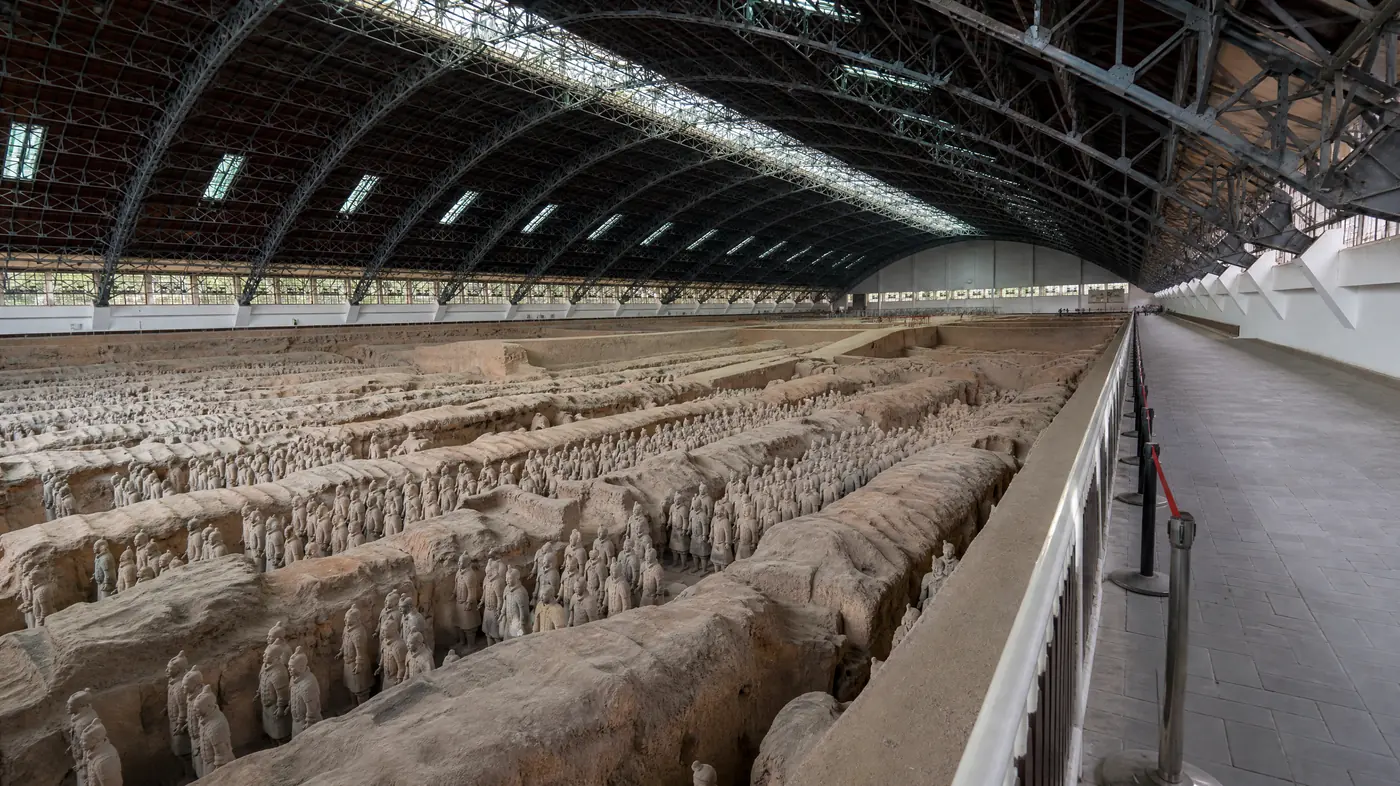
The Terracotta Army is about an hour east of central Xi'an, in Lintong, and the trip takes a morning at least. That is a fair question to weigh on a short stay in China. For most visitors the answer comes the moment they walk into the hall over Pit 1.
Below: why the site is famous, what you see on the day, whether there are bodies inside, the story of the workers, real or fake, female warriors, what damaged the figures, and a table of what each tour adds to the visit.
The quick answer
Yes. It is a UNESCO World Heritage site, the figures are real fired clay from the reign of Qin Shi Huang, and more than 7,000 soldiers, horses, chariots and weapons have been found. There are no bodies inside, no female warriors have been confirmed, and the excavation is still going on. A guide makes the difference between rows of statues and an army you understand.
Is the Terracotta Army worth visiting?
Yes. It is the army of China's first emperor, found by farmers in 1974, listed by UNESCO in 1987, and it is still being dug up in front of visitors.
The reasons it draws people from all over the world are simple to list:
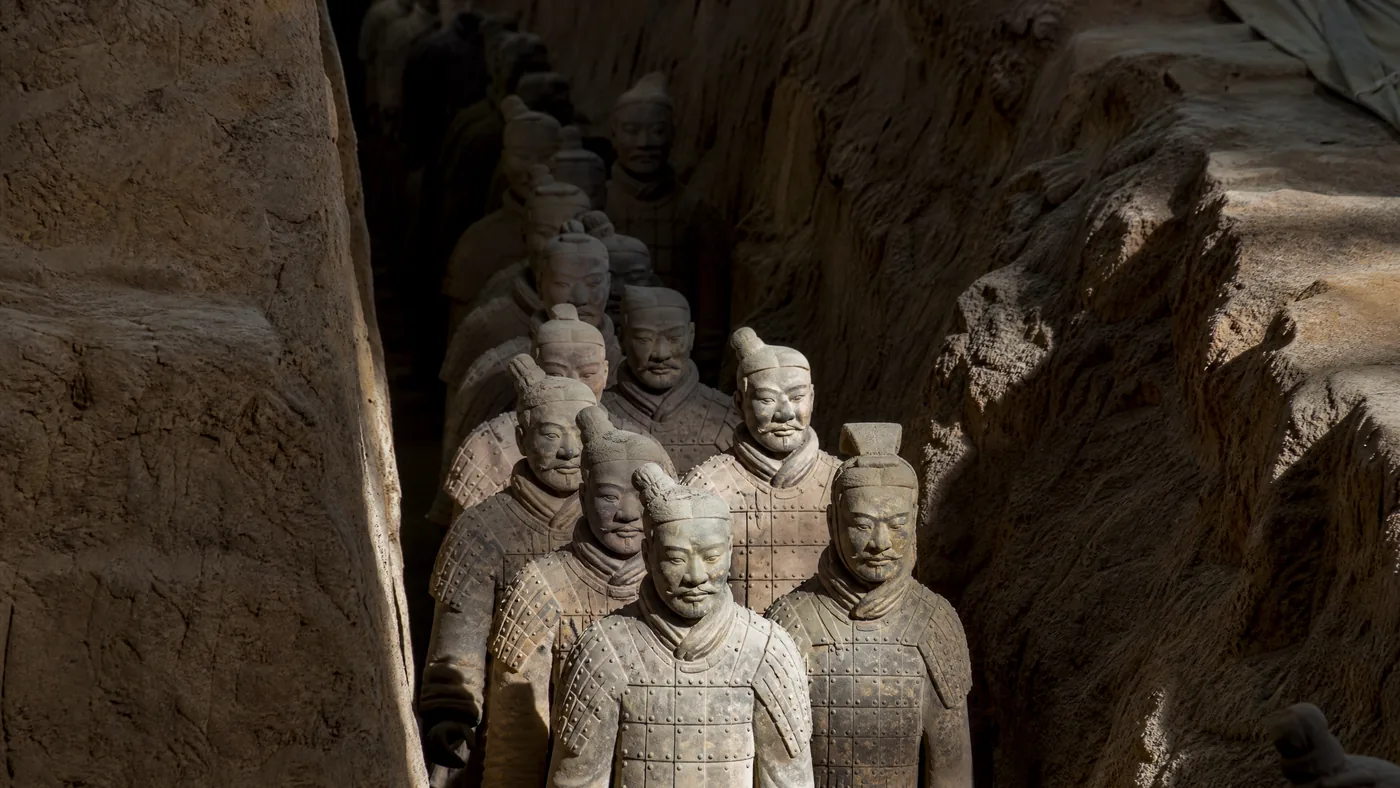
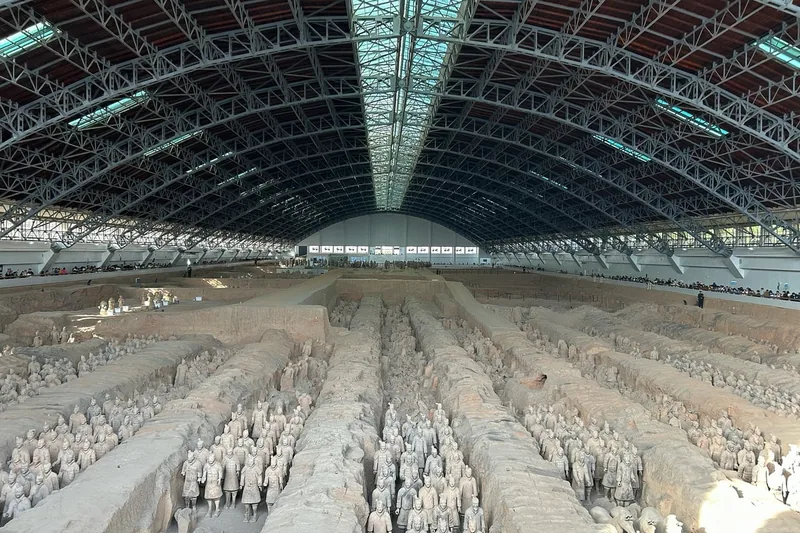
- The scale. China Daily's government page counts more than 7,000 pottery soldiers, horses, chariots and weapons found so far. Pit 1 alone is 230 m long.
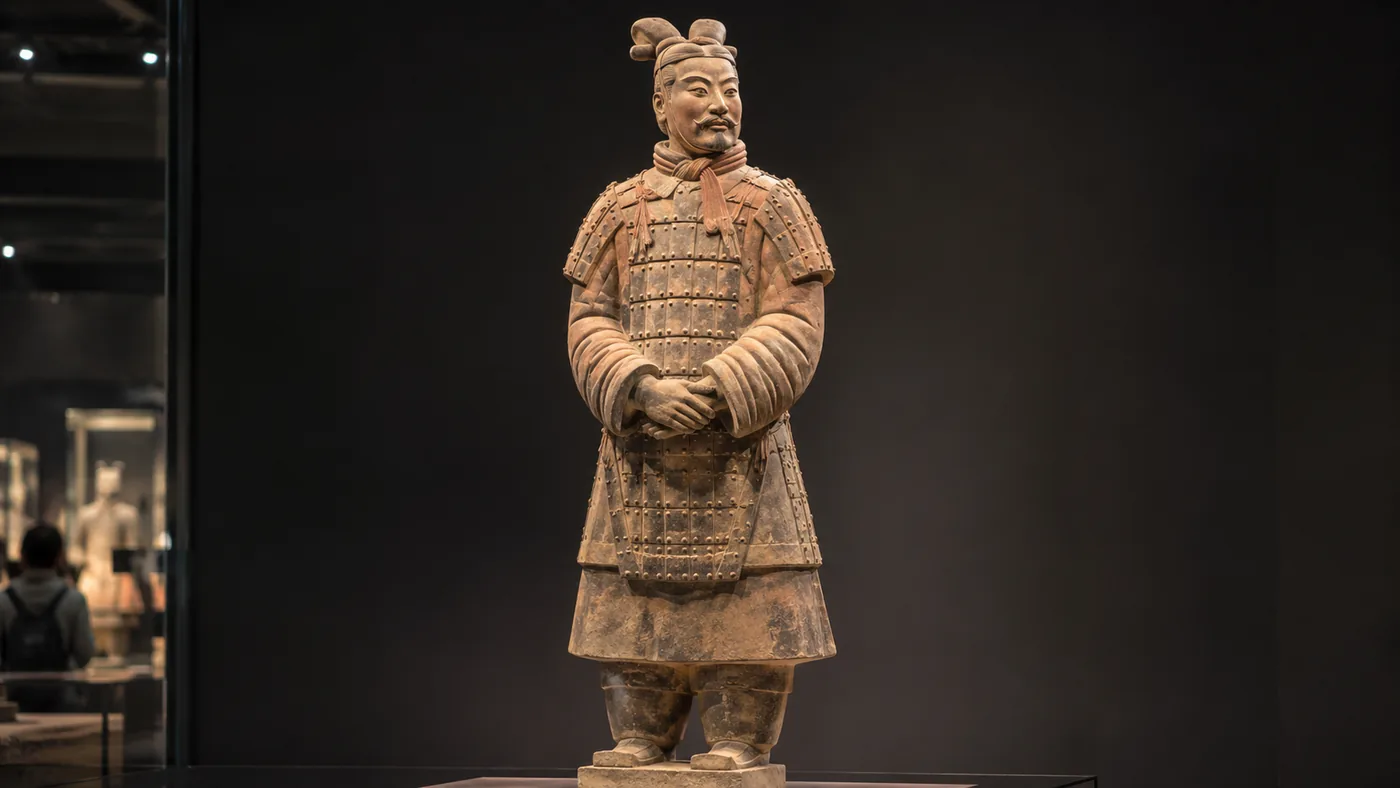
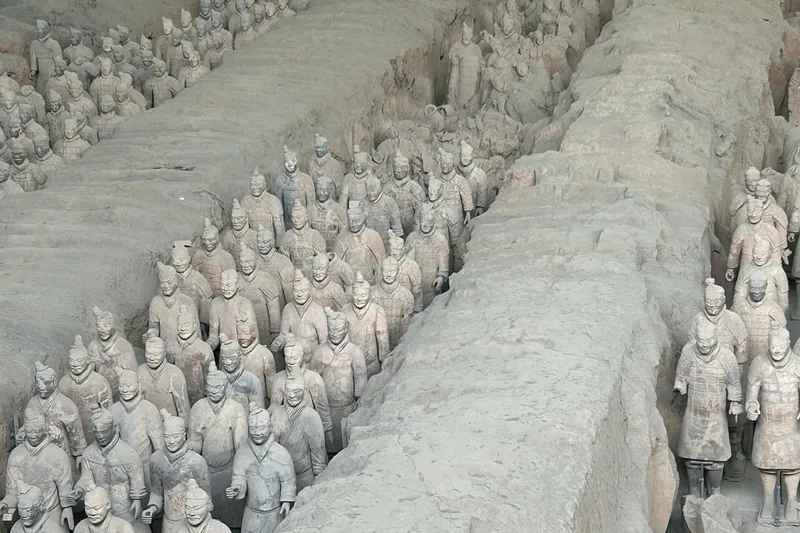
- Every face different. Wikipedia reports that scholars identified about ten base face forms, then extra clay was added to give each figure its own features.
- The story. On 29 March 1974, farmers digging a well about 1.5 km east of the emperor's tomb mound struck pieces of terracotta (Wikipedia).
- The history. Qin Shi Huang united China and died in 210 BC. UNESCO inscribed the Mausoleum of the First Qin Emperor in 1987 and calls the warriors, horses and bronze carts major works of Chinese sculpture.
Is it crowded? On holiday weeks, very. On a normal weekday morning, the hall over Pit 1 is so big that you find space at the rail. Our best-time guide has the quiet weeks.
What do you actually see at the Terracotta Army?
Three pits under halls, the bronze chariots, and, if you have time, Lishan Garden around the emperor's tomb mound. About 1.5 hours each for the pits and the garden.
The Emperor Qinshihuang's Mausoleum Site Museum has two parts, linked by a free shuttle:
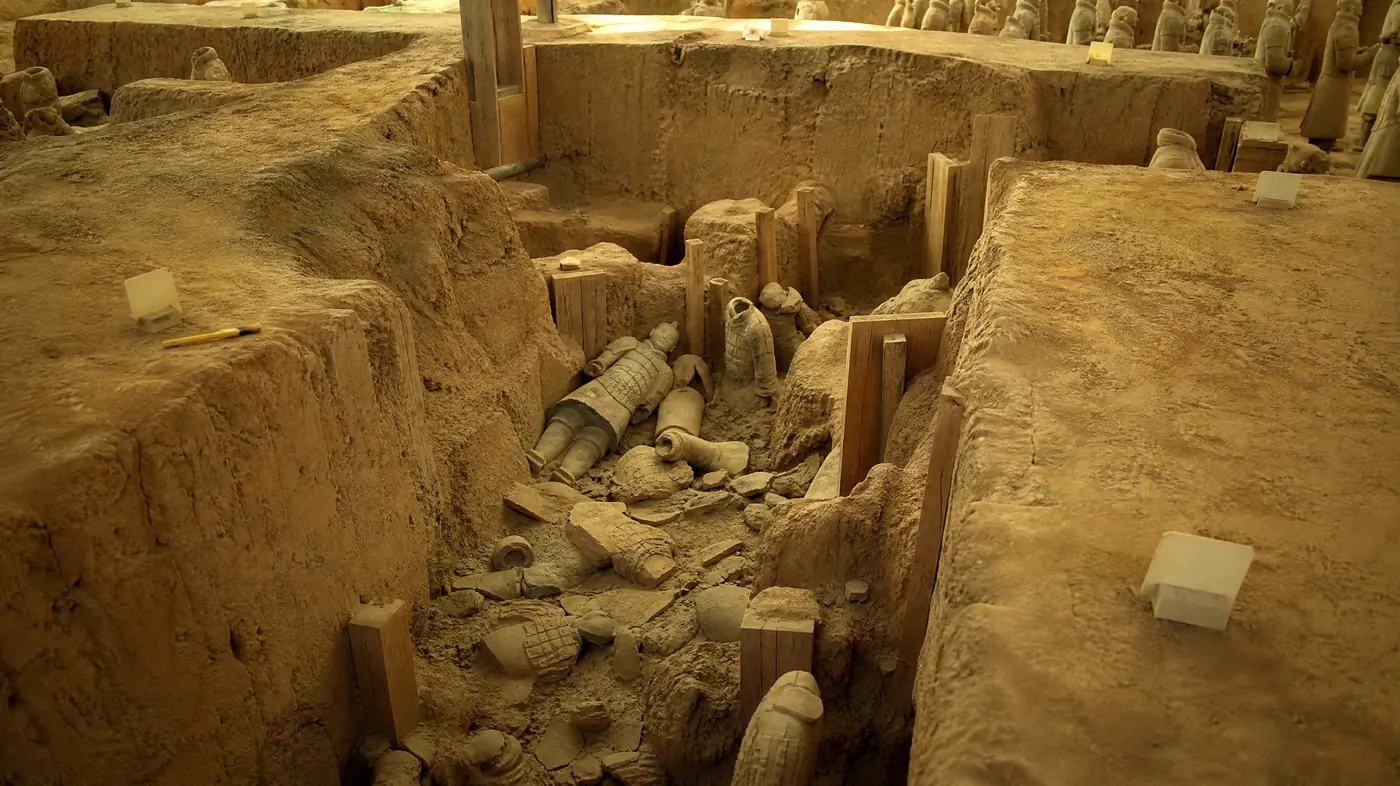
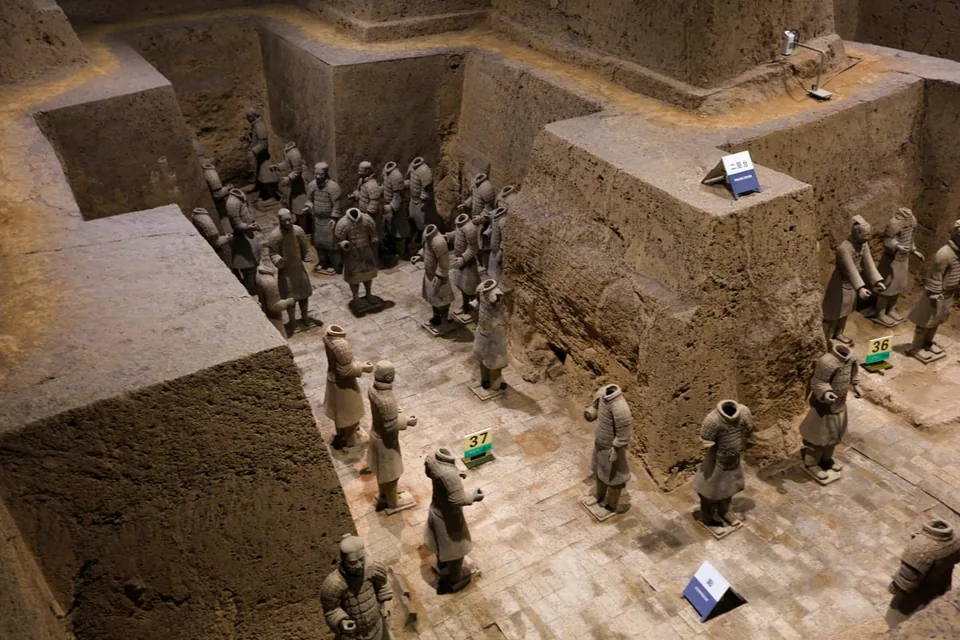
- Pit 1, the big one. Ranks of infantry facing east in long earth corridors, with figures still being pieced together at the back of the hall.
- Pit 3, small, thought to be the command post.
- Pit 2, cavalry, chariots and the archers, with the famous kneeling archer.
- The bronze chariots, two half-size carriages with four horses each, found next to the tomb mound.
- Lishan Garden, the tomb park at the foot of Mount Li, with smaller pits of acrobats and civil officials, per China Daily's government page.
The official two-hour route on China's tourism portal runs Pit 1, Pit 3, Pit 2, then the Bronze Chariots Exhibition Hall. Our guide to the pits explains what is in each one.
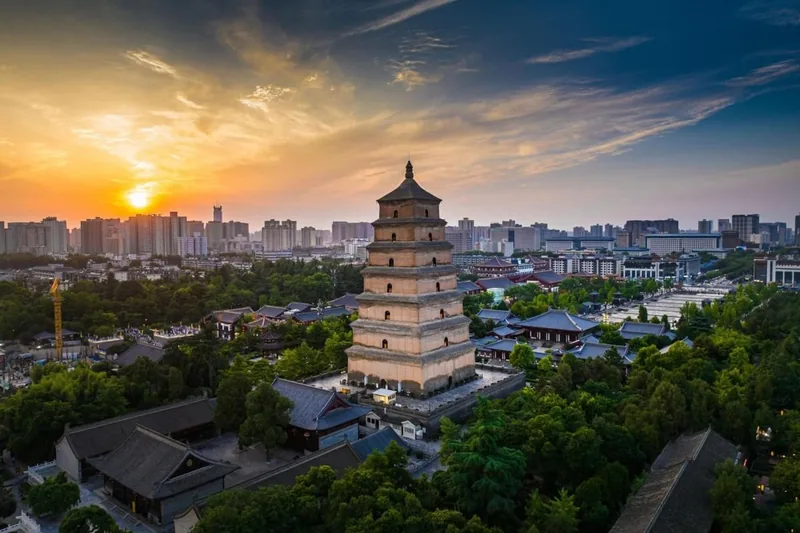
The Terracotta Army first, then the City Wall, the Big Wild Goose Pagoda and the Muslim Quarter bazaar, with a buffet lunch and a guide.
Explore the City Wall and pagoda day Tour detailsAre there real bodies inside the Terracotta Army?
No. The warriors are fired clay, made in parts and joined. Museum experts answering questions through Xinhua said the figures contain no bones.
It is one of the most searched questions, and the answer is plain. In a 2019 question-and-answer with Xinhua, experts from the museum said the figures hold no human remains. They were built from clay in sections: body first, then arms and legs, then the head. Some figures have a hollow upper half and a solid lower half.
Wikipedia adds how the work was organized. Government laborers and local craftsmen made heads, arms, legs and torsos separately in workshops, then joined them. Each workshop marked its name on what it produced, an early form of quality control.
The figures were life-size, typically 1.75 m to about 2 m tall, with officers taller. That is why they feel like people when you stand over them.
Were the terracotta workers buried alive?
Not in the army pits. An ancient account says craftsmen were sealed inside the emperor's own tomb, which has never been opened, so it cannot be checked.
The story comes from Sima Qian, the Han historian who wrote about a century after the emperor died. As Wikipedia translates the passage, after the burial the inner passage was blocked and the outer gate lowered, trapping the workers who knew the tomb's secrets. The same text says the emperor's childless concubines were made to follow him in death.
Three things to keep in mind:
- The account is about the tomb mound, not the warriors. Sima Qian never mentions the Terracotta Army at all, per Wikipedia.
- The tomb is still unopened. Nobody has been inside to confirm or deny it.
- Workers did die there. Wikipedia records a grave pit excavated in 2003 with 121 skeletons that scholars attribute to the site's workers, mostly aged 15 to 40.
Historical records cited by the museum's experts speak of 720,000 workers over 38 years for the whole mausoleum. A good guide tells this part of the story well.
Is the Terracotta Army real or fake?
Real. The figures you see in the pits were dug from the ground where they stand. The small warriors sold in shops are modern replicas.
UNESCO lists the site as a World Heritage property, and the excavation is still producing finds. In January 2026, Xinhua reported two chariots found in Pit 2, buried without their wheels, along with 15 pieces of chariot and horse gear and nine weapons. In Pit 1, the third major excavation began in 2009, per a Xinhua report of January 2023.
Where does the doubt come from? Partly from touring replicas: Wikipedia records an exhibition of 120 full-size replicas that travelled through German cities in 2003 and 2004. Partly from the souvenir stalls, which sell copies of every size.
A real warrior is not for sale at any price. They belong to the museum, and many still lie in the ground. The copies make a nice gift, nothing more.
Are there any female terracotta warriors?
None have been confirmed. The museum's experts told Xinhua that no female figures have been identified so far.
The army in Pits 1, 2 and 3 is an army of men: infantry, archers, cavalrymen, chariot drivers and officers. Wikipedia lists those types, and the figures are thought to be modeled on real men. In the same 2019 answers, the museum's experts noted that even the sex of the horses is unclear.
The wider mausoleum is not only military. The museum's own pages describe a pit of acrobats found in 1999 and a pit of civil officials found in 2000, near the tomb mound. Both are part of Lishan Garden. If that side of the story interests you, the tour with the mausoleum covers the pits and the tomb park in one day.
Who destroyed the terracotta soldiers?
Fire, collapse and time. Many figures were found broken, and Wikipedia records evidence of fire in the pits. A later rebel, Xiang Yu, is said to have looted the site.
Many of the figures in Pit 1 are put back together from fragments, which surprises first-time visitors. The causes, from the sources:
- Fire and collapse. Xinhua's 2026 report on the restoration work names fires, soil collapses and groundwater changes as the damage of 2,000 years.
- Looting, by tradition. Later historical accounts say Xiang Yu, a rival for the throne after the emperor's death, looted the mausoleum. Wikipedia notes that the tomb itself may not have been plundered.
- The weapons. Most figures once held real bronze weapons. Most were looted soon after or rotted away, though more than 40,000 bronze items have been recovered (Wikipedia).
The repair work is part of the visit now. Xinhua reported in September 2026 that a conservation lab at Pit 1, opened in 2024, lets visitors watch specialists piece warriors together by hand.
Pickup, the museum ticket, an English-speaking guide and lunch in a local family's home, at the lowest price here.
Check dates for the tour with a family lunchWhich Terracotta Army tour makes the trip most worth it?
Every option reaches the same three pits. Pick by what else the day adds: a city tour, a family lunch, the tomb park, a capped group or your own guide.
The pits are the same for everyone. The difference is the rest of the day, and what it costs:
| Tour | The day adds | Length | From |
|---|---|---|---|
| Terracotta Army Small-Group or Private Tour | Morning or afternoon, no shop stops | 2.5 to 8 hours | $35 |
| Terracotta Army All-Inclusive Tour with Family Lunch | Lunch with a local family | 2.5 to 7 hours | $20 |
| Terracotta Army, City Wall, Pagoda & Bazaar with Lunch | City Wall, Wild Goose Pagoda, bazaar | 5 to 9 hours | $20 |
| Terracotta Army Entry Ticket | The ticket only, at your own pace | Valid all day | $32 |
| Terracotta Army Small-Group Tour, 8 or 15 Guests | Off-peak morning, capped group | 2.5 to 8 hours | $35 |
| Terracotta Army Ticket & Guided Bus Tour | Coach and guide, options to add | 6 to 7 hours | $29 |
| Terracotta Army & Lishan Park, the Emperor's Mausoleum | Lishan Garden, the tomb park | 5 to 6.5 hours | $32 |
| Private Terracotta Army Half-Day Tour | Your own guide or driver | 5 to 8 hours | $70 |
| Terracotta Army & Huaqing Palace with Lunch | Huaqing Palace hot springs | 8 hours | $98 |
| Private Car to the Terracotta Army and Back | A car and driver, no guide | 5 hours | $48 |
| From Beijing: Terracotta Army Day Trip by Bullet Train | Bullet train from Beijing | 17 hours | $156 |
Prices are GetYourGuide from-prices in USD per person, and they move with the date. On one day trip, our pick is the City Wall and pagoda day: the warriors in the morning, then three of the city's sights. With more time in Xi'an, the most booked tour keeps the focus on the pits and leaves your afternoon free. Our timing guide helps you plan the rest of the day.
Frequently asked questions
Is the Terracotta Army worth visiting?
Yes. It is a UNESCO World Heritage site with more than 7,000 figures, horses, chariots and weapons found, and Pit 1 alone is 230 m long.
Are there bodies inside the terracotta warriors?
No. The figures are fired clay made in sections. Experts from the museum told Xinhua that they contain no bones.
Is the Terracotta Army real?
Yes. The figures in the pits are the originals, and new finds are still reported. The small warriors sold in shops are replicas.
Are there female terracotta warriors?
None have been confirmed. The museum's experts said in 2019 that no female figures have been identified.
Ready to book
Choose your tour
Free cancellation up to 24 hours before on every option. Prices are from-prices in USD and move with the season.
Terracotta Army, City Wall, Pagoda & Bazaar with Lunch
- Hotel pickup
- Terracotta Army, City Wall and Big Wild Goose Pagoda
- Expert guide
Terracotta Army Small-Group or Private Tour
- Hotel pickup and return in Xi'an
- Museum booking handled for you
- English-speaking guide
Terracotta Army All-Inclusive Tour with Family Lunch
- Hotel pickup and drop-off
- Museum ticket
- English-speaking guide