Booking choice: The tour with the mausoleum, from $32 per person. Check dates Tour details
The places come from the museum's guide page, China Daily's government page on the museum, travelchina.org.cn (China's official tourism site) and Wikipedia. The pomegranate facts are from the Shaanxi provincial government's English site, People's Daily and the Xi'an government. Each tour's details are from its GetYourGuide listing, read on 16 November 2026.
The quick answer
Lintong is one of the urban districts of Xi'an, named after the Lin and Tong rivers. Beside the three pits it holds Lishan Garden, the tomb park around the emperor's mound, reached by a free shuttle on the same museum ticket. Huaqing Palace, the hot-spring palace of the Tang emperors, stands at the foot of Mount Li, and the district has grown pomegranates for about two thousand years. The tour with the mausoleum covers the pits and the tomb park; the Huaqing Palace day adds the hot springs.
What is there to see in Lintong besides the Terracotta Army?
The emperor's tomb park, Lishan Garden; Huaqing Palace and its hot springs; Mount Li above them; and the pomegranate orchards on the slopes.
Lintong is one of the 11 urban districts of Xi'an, and its name joins two rivers, the Lin on the east side and the Tong on the west, per Wikipedia. It is where the farmers dug their well in March 1974. The mausoleum sits at the northern foot of Mount Li, about 3.5 km east of the district, travelchina.org.cn says, and the pits lie about 1.5 km east of the tomb mound.
Everything else is close. Huaqing Palace stands at the foot of the same mountain, about 25 km east of central Xi'an. The table sorts the sights by where they are and how they fit a tour.
| Place | Where | What it is | On a tour |
|---|---|---|---|
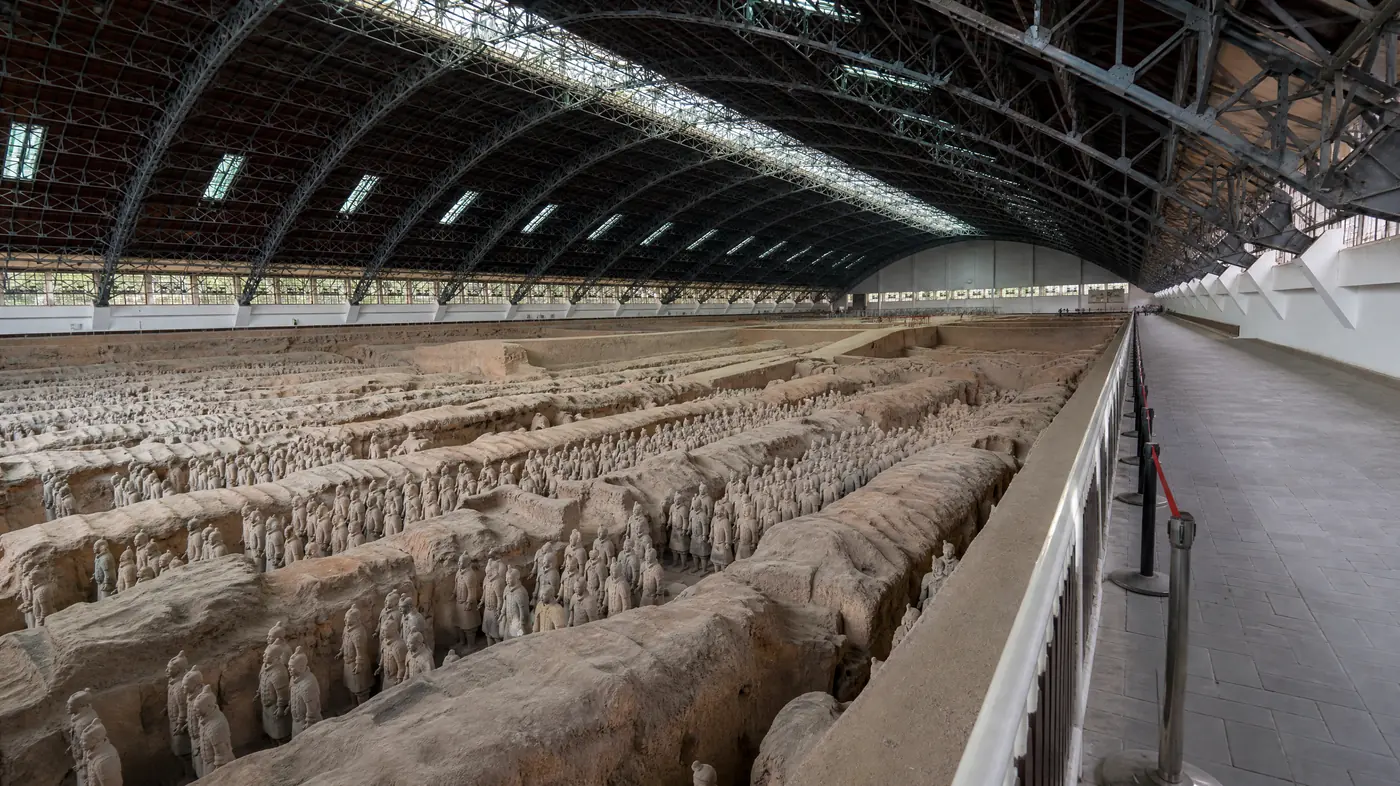
| The three pits | The Terracotta Army Museum, east of the tomb mound | The army itself, in Pits 1, 2 and 3 | Every tour here |
| Lishan Garden | The tomb park around the mound, by free shuttle from the pits | The emperor's tomb mound and the side-pit halls | The tour with the mausoleum |
| Huaqing Palace | At the northern foot of Mount Li | Hot springs used by rulers for almost three millennia | The Huaqing Palace day |
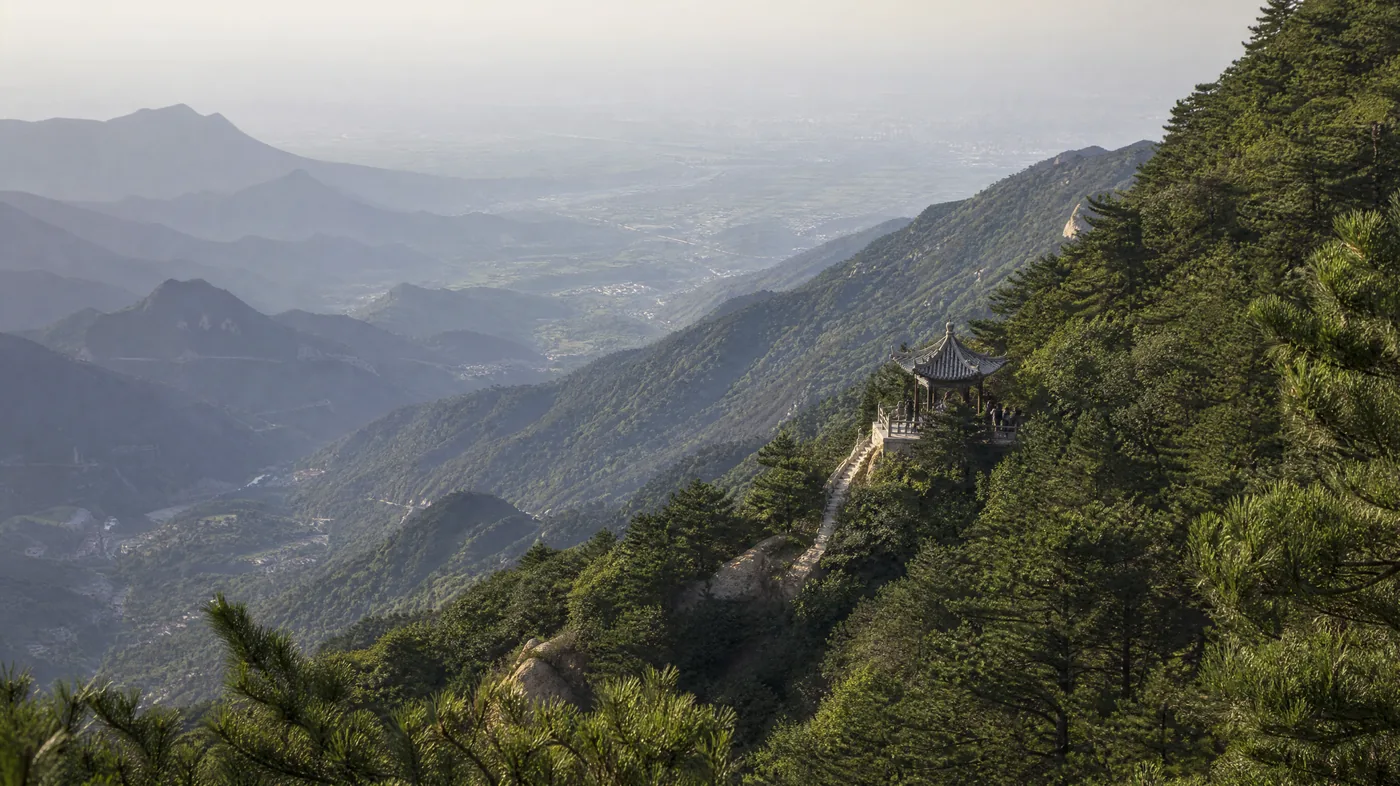
| Mount Li | Above the palace and the tomb | A forest park and the Bingjian Pavilion | Ask on the private tour |
| Pomegranate orchards | Across the hillsides; Longhe Pomegranate Manor in Anli Village | Red blossom in early summer and a flower festival | Not on the listings; ask on a private day |
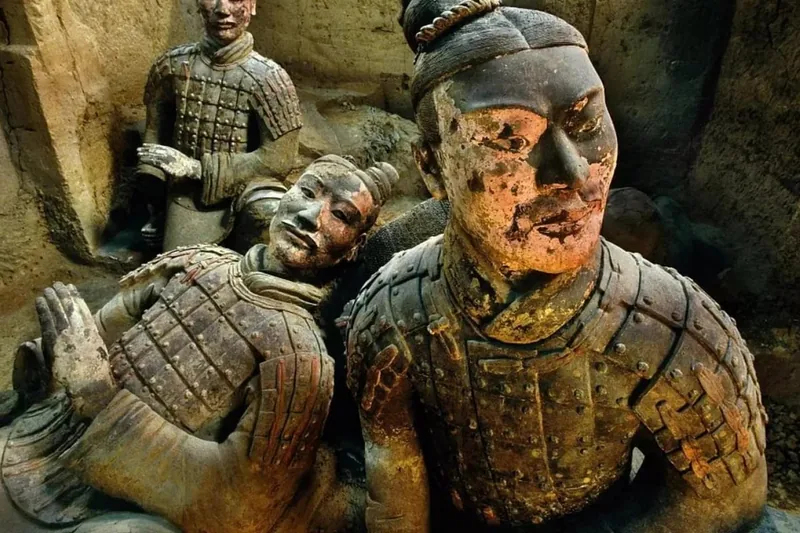
Both halves of the museum in one day: the three pits and Lishan Garden, small-group or private, or a ticket-only option.
Explore the tour with the mausoleum Tour detailsWhat is Lishan Garden at the Terracotta Army?
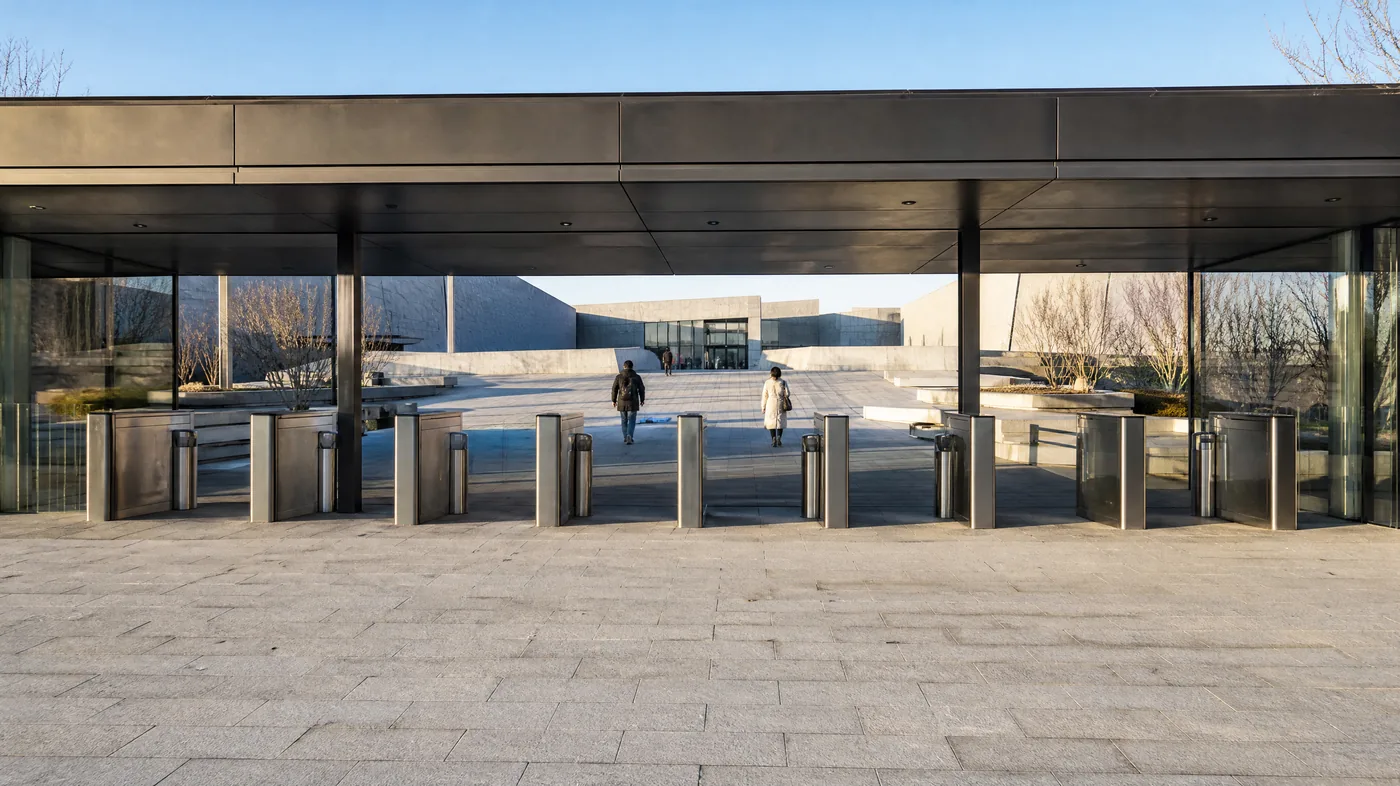
The second half of the museum: the Qin Shi Huang Mausoleum Archaeological Site Park around the emperor's tomb mound, on the same ticket as the pits.
The museum is two sites, and Lishan Garden is the one that is easy to miss. It surrounds the tomb mound, which Wikipedia gives as about 76 m tall. The tomb itself has not been excavated. Around it, China Daily lists the Museum of Terracotta Acrobatics, the Museum of Terracotta Civil Officials and the Museum of Stone Armor.
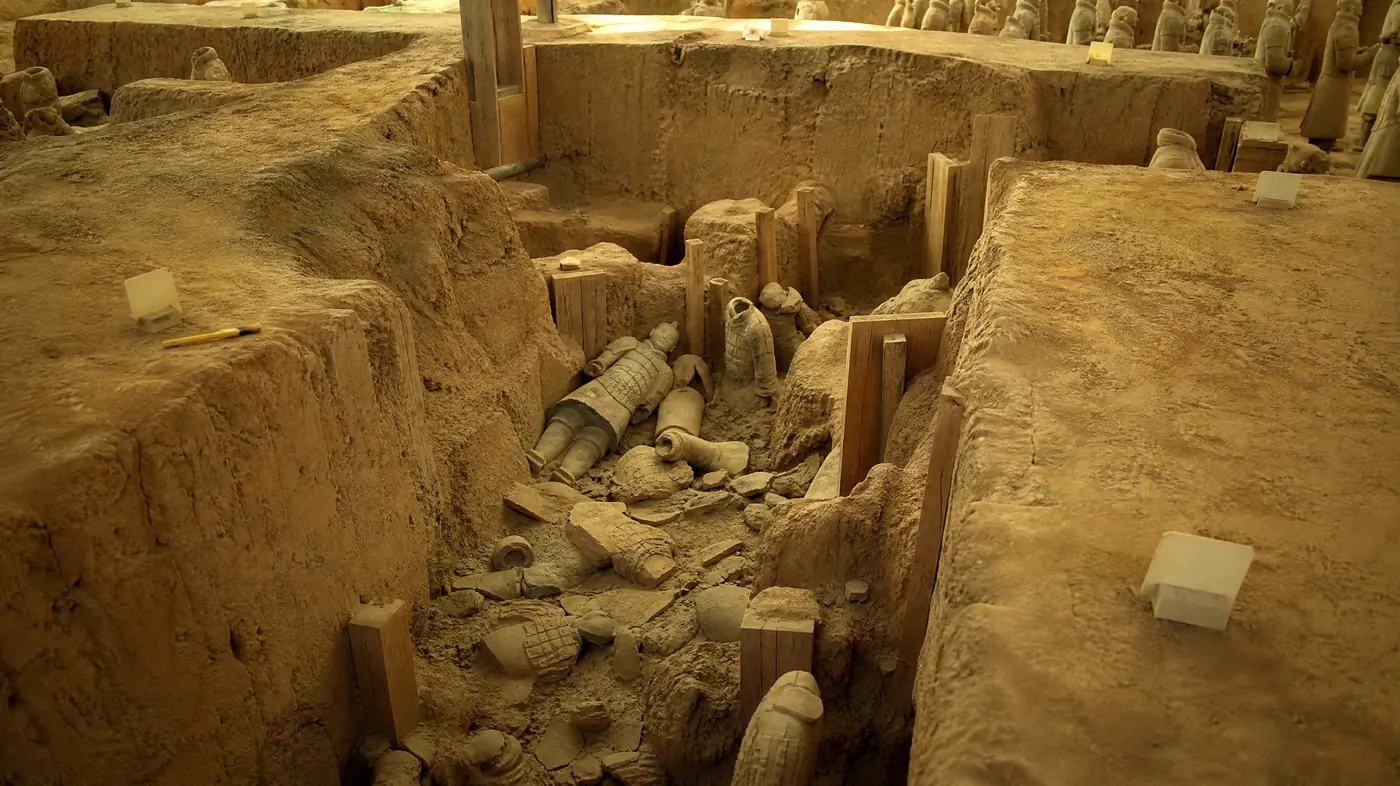
The museum gives the garden about 1.5 hours, like the pits, with a free shuttle between them. The shuttle is mentioned on the listing of the tour with the mausoleum too. What is inside each pit, from the main army to the bronze chariots, is in our guide to the pits.
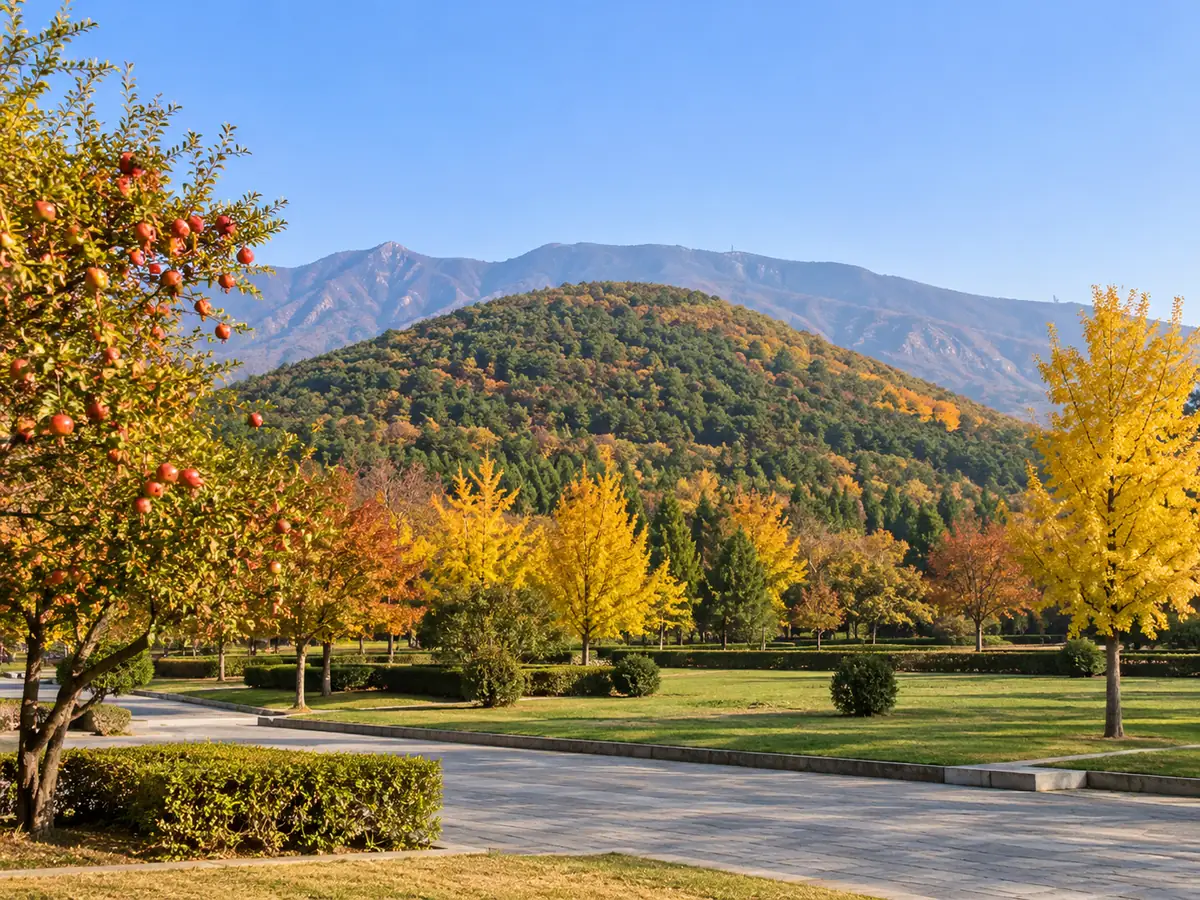
The pits and Lishan Garden with a guide, small-group or private, and the free shuttle between the two sites.
Check dates for the tour with the mausoleumIs Huaqing Palace worth adding to a Terracotta Army day?
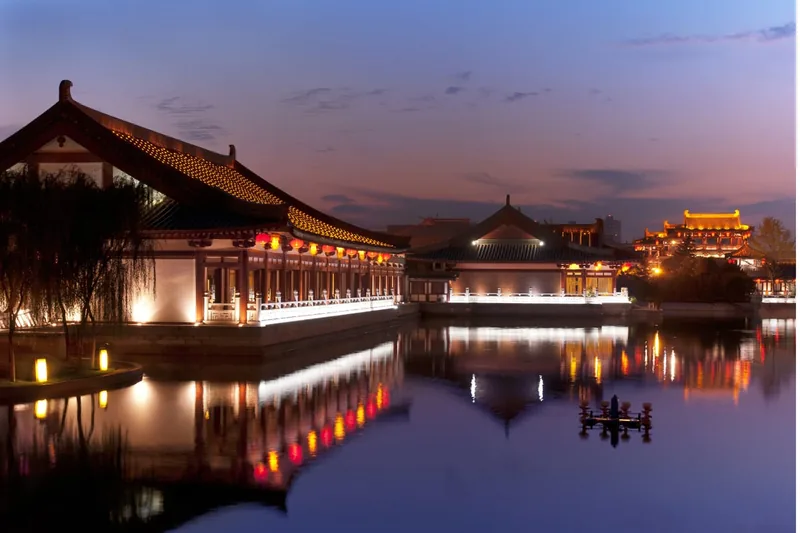
If you like a story with your stones, yes. It is a hot-spring palace used by rulers for almost three millennia, close to the pits.
Wikipedia traces palaces on the springs back to King You of Zhou, Qin Shi Huang and Emperor Wu of Han. Emperor Xuanzong of Tang rebuilt the complex as Wenquan Palace in 723 and renamed it Huaqing Palace in 747. It is remembered for his romance with Yang Guifei and, much later, for the Xi'an Incident of 1936. travelchina.org.cn lists the Museum of the Tang Imperial Hot Spring Heritage Site and halls such as Feishuang Hall among the sights.
From April to October the palace stages The Song of Everlasting Sorrow every evening, a 70-minute live-action dance drama about Xuanzong and Yang Guifei, per travelchina.org.cn. The Huaqing Palace day pairs the pits with the palace and lunch, in 8 hours, with no shopping planned.
The pits plus the hot-spring palace at Mount Li, with lunch and a guide, and no shopping planned.
Check dates for the Huaqing Palace dayCan you visit Mount Li from the Terracotta Army?
Mount Li rises right above the palace and the tomb, so it is close. Its forest park is a separate visit from the museum.
Mount Li, or Lishan, is part of the Qinling range and rises to 1302 m, per Wikipedia. It is the reason the emperor chose this spot: an old geography text records that the mountain was famed for its jade and gold. Today it is Li Mountain National Forest Park. On its slope stands the Bingjian Pavilion, which marks where Chiang Kai-shek was caught hiding in a crevice during the Xi'an Incident.
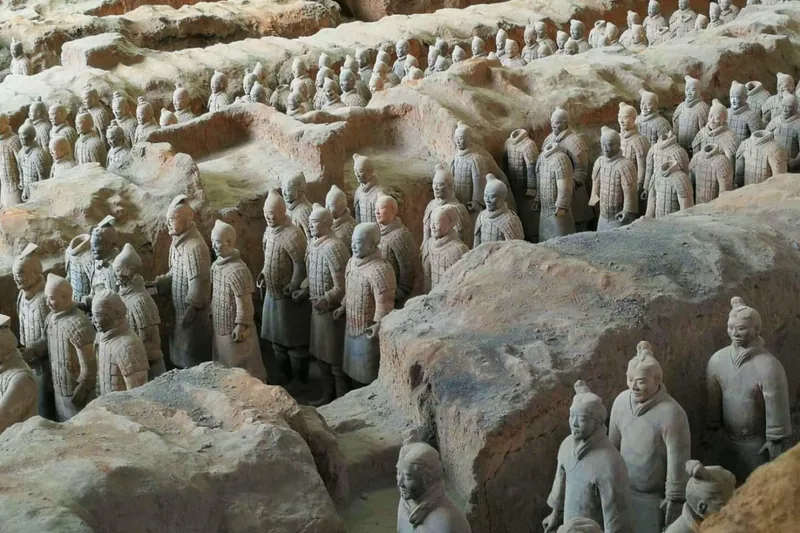
None of the group tours here list the mountain itself. On the private half-day tour you choose your guide or a transfer option, so ask about time for the slope when you book. How long the pits and the tomb park take, before anything extra, is in our timing guide.
Your own guide or driver for the Terracotta Army, at your own pace.
Check dates for the private half-day tourWhy is Lintong known for pomegranates?
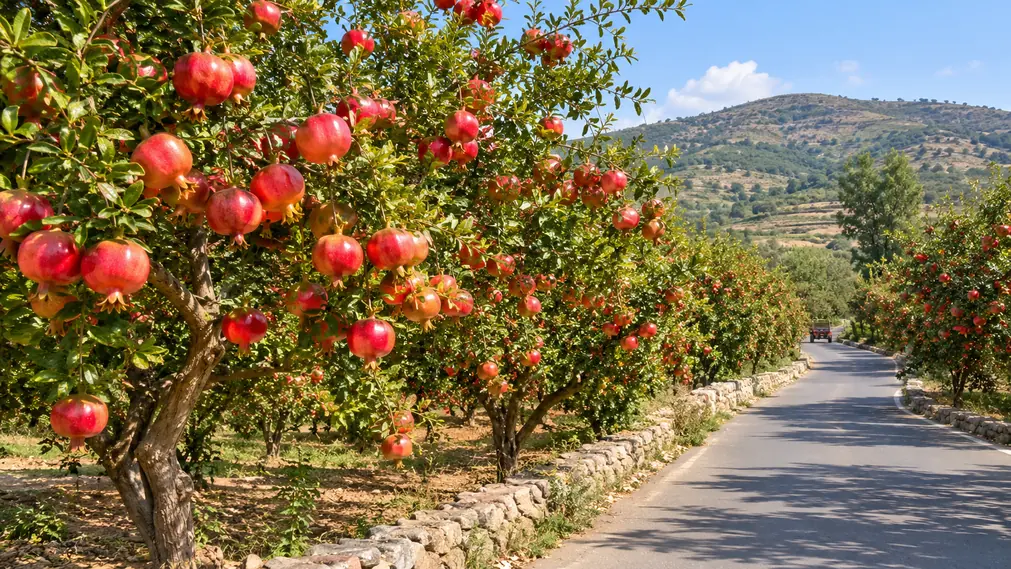
Lintong has grown them for about two thousand years, on orchards that spread over the hillsides. In early summer the slopes turn red with blossom.
The story goes back to the Western Han dynasty, when the envoy Zhang Qian brought pomegranates to China from the West, the Shaanxi provincial government's English site says. It puts Lintong's orchards at about 80,000 mu and the harvest at over 80,000 tons of fresh fruit a year. The Longhe Pomegranate Flower Festival has been held in Anli Village every early summer since 2017.
People's Daily reported in 2024 that the Lintong pomegranate planting system joined China's list of Important Agricultural Heritage in 2020, and that local firms make wine, juice and vinegar from the fruit. The fruit travels far now: on 23 November 2025 a cold-chain truck of Lintong pomegranates left for Vietnam, the Xi'an government reported.
How do you plan a day in Lintong?
Pits first, tomb park second, then Huaqing Palace if your day allows. The table splits it by part of the day, not by clock.
Exact times depend on your pickup and the season: from 16 November to 15 March the last entry is at 16:30 and closing is at 18:00. The drive from the center is about an hour, per the Shaanxi provincial government. How to get there by tour, car or public transport is in our getting-there guide.
On a group tour the operator sets the order. For your own plan, the private car takes you from a hotel, the airport or a station and back, without a guide, and needs booking only 5 hours ahead. Remember to book the museum ticket for that one yourself.
| Part of the day | What to do | Good to know |
|---|---|---|
| Early morning | Pickup in Xi'an and the drive east to Lintong | About an hour's drive from the center, per the Shaanxi provincial government |
| Morning | The three pits, then the bronze chariots hall | About 1.5 hours, per the museum |
| Late morning | The free shuttle to Lishan Garden and the tomb mound | About 1.5 hours more; the same museum ticket |
| Midday | Lunch, if your tour includes it | Included on the Huaqing Palace day and the family-lunch tour |
| Afternoon | Huaqing Palace at the foot of Mount Li | On the Huaqing Palace day; ask on a private day |
| Evening | The Song of Everlasting Sorrow at Huaqing Palace, April to October | 70 minutes, per travelchina.org.cn; ask your operator about a late return |
Frequently asked questions
What is there to do in Lintong?
Beside the Terracotta Army: Lishan Garden and the emperor's tomb mound, Huaqing Palace and its hot springs, Mount Li and the pomegranate orchards.
Is Lishan Garden included in the Terracotta Army ticket?
Yes. The museum is two sites, the pits and Lishan Garden, with a free shuttle between them; each takes about 1.5 hours, per the museum.
How far is Huaqing Palace from the Terracotta Army?
Close: both stand at the northern foot of Mount Li in Lintong. The Huaqing Palace day pairs them in 8 hours with lunch.
When is the Song of Everlasting Sorrow performed?
Every evening from April to October at Huaqing Palace, for 70 minutes, per travelchina.org.cn.
Ready to book
Choose your tour
Free cancellation up to 24 hours before on every option. Prices are from-prices in USD and move with the season.
Terracotta Army & Lishan Park, the Emperor's Mausoleum
Both halves of the museum: the pits and the tomb park
Terracotta Army & Huaqing Palace with Lunch
The pits plus the hot-spring palace at Mount Li
Private Terracotta Army Half-Day Tour
Your own guide or driver, your own pace